
A blog can take about 20 minutes to set up, according to Scott Chow’s beginner guide, updated July 16, 2026. You can start with basic computer skills and a clear idea of what you want to share.
This beginner blogging guide covers the first steps, from choosing a name to publishing your first post. Learn how to start a blog in 2026, reach readers, and build a platform. It may support your business or earn income over time.
Key Takeaways
- You can start a blog with basic computer skills.
- Choose a name that fits your topic and audience.
- Customize your blog before publishing your first post.
- Promote useful posts to help readers find your blog.
- Explore ways to earn income as your audience grows.
Why Blogging Still Matters in 2026
Blogs offer a lasting place to share useful ideas and reach readers who care about your topic. As blogging trends change, clear, helpful posts remain a practical way to build trust and support your goals.

Build an online presence, share your expertise, and connect with readers
Publishing advice, stories, or guides shows what you know. Readers can respond and return for more, helping you build relationships over time. This steady effort supports establishing an online presence beyond a single social media post.
Use blogging to support a business or create a potential income stream
For a business, useful posts can appear in search results and help potential customers understand your products or services. Once you have an audience that trusts your work, ads, affiliate links, and sponsorships may provide income. These options tend to depend on reader trust and consistent effort.
Understand what current content marketing research says about blog posts
In 2024, Content Marketing Institute research found that 47% of B2C marketers reported their best results. They said short articles and blog posts delivered those content marketing results during the prior 12 months.
Taboola’s 2024 findings reported that 29% of B2C marketers called their content marketing very successful. Meanwhile, 52% said it was moderately successful.
How to Start a blog in 2026: Your Step-by-Step Blogging Tutorial
A successful blog begins with a clear topic and a useful plan. This step-by-step blogging tutorial guides you from your first idea to a simple growth strategy. Keep readers’ needs in mind throughout the blog creation process.
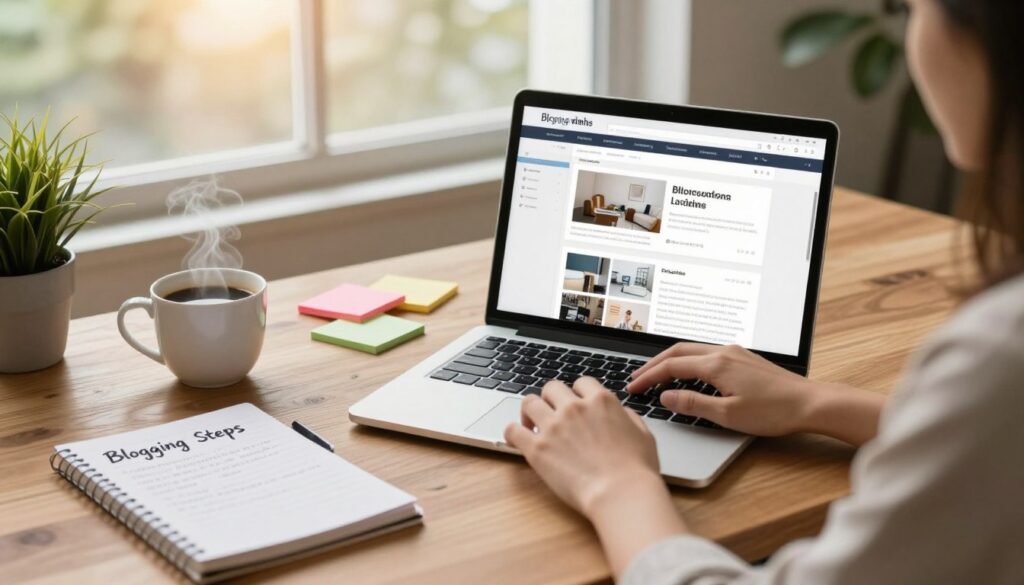
Choose a topic and define your goals
Choose a topic you can cover with care and interest. Consider who you want to reach and what they hope to learn. Set a clear goal, such as sharing expertise, supporting a business, or building income over time.
Choose a name that fits your topic and feels easy to remember. Decide what success means to you, such as publishing regularly or growing an email list.
Set up your blog and publish your first post
Select a blogging platform, register a domain, and choose hosting if needed. Create a clean design and basic pages, such as About and Contact. Use a few clear categories so visitors can find helpful information.
For your first WordPress post, open Posts, then add a title and text. Include an image if it helps explain your point. Review the post for clarity before selecting Publish.
A manageable blog creation process makes it easier to continue.
Promote your content and plan for growth
Share each post with people who may find it useful. Use social media, relevant online communities, or an email list to reach readers. Track which topics get attention and use that feedback to plan future posts.
Once readers trust your work, explore ways to earn from the blog.
Use this step-by-step blogging tutorial as a simple guide, and adjust your plan as your audience grows.
| Step | What you do | Why it matters |
|---|---|---|
| Plan | Choose a topic, audience, name, and goal. | Gives your blog a clear purpose. |
| Set up | Select a platform, domain, and design. | Creates a home readers can use and trust. |
| Publish | Write a helpful first post and organize key pages. | Gives visitors a useful place to start. |
| Grow | Promote posts, learn from reader response, and plan ahead. | Helps you build a steady audience over time. |
Choose a Focused Niche for Your Blog
A focused niche gives your blog a clear purpose and shows readers what to expect. When starting a successful blog, choose a topic you enjoy and readers need. It should also offer room to earn income.

Find the overlap between your interests, audience demand, and earning potential
List 10 to 15 topics you know or want to explore. Consider reader questions and products or services that meet their needs. A bakery might cover wedding cake planning, while a construction company could explain home renovation budgets.
Choose a specific angle instead of a broad subject. Budget family travel gives readers a clearer promise than travel alone. Eco-friendly trips in Europe narrow the focus further.
Research search interest, competition, and long-term relevance
Check topic interest with Google Trends. Use Google Keyword Planner or Ubersuggest to find related search phrases. Review other blogs to see their coverage and find useful gaps.
Competition can signal reader demand, while your distinct experience can help your blog stand out. This research supports starting a successful blog with lasting relevance.
| Broad topic | Focused niche | What to assess |
|---|---|---|
| Travel | Budget family travel | Reader interest and practical planning needs |
| Food | Wedding cake selection | Seasonal demand and bakery services |
| Home improvement | Renovation budgeting | Search interest and lasting homeowner questions |
Define Your Target Audience and Reader Persona
Your blog can reach more readers when you write for one clear group instead of everyone. These blogging tips help you use a reader persona to focus each post on real needs.

Identify your readers’ goals, questions, and challenges
Consider your readers’ experience, goals, and daily challenges. Note what they want to learn, which questions they ask, and where they seek advice. These blogging tips can help you choose a useful angle for each post.
Use customer questions and online communities to understand what they need
For a business blog, turn common customer questions into article ideas. A law firm might explain common mistakes in employment contracts. An accounting firm could offer clear guidance during tax season.
Look for repeated questions in Facebook and LinkedIn groups, Reddit, Quora, and niche forums. Industry conferences, fairs, and webinars can show what people discuss. Keep a list of useful themes and match each one to your readers’ needs.
| Persona detail | What to learn | How it shapes a post |
|---|---|---|
| Goals | What readers hope to accomplish | Offer clear steps toward that outcome |
| Challenges | What slows them down or causes confusion | Explain solutions in plain language |
| Questions | What they ask customers, peers, or online groups | Answer one focused question per article |
| Information sources | Which groups, forums, events, or channels they use | Choose examples and formats that feel familiar |
Pick a Blog Name and Choose a Domain
Your blog name creates a first impression. When starting a blog from scratch, choose a short name that is easy to spell and fits your topic. A clear name helps readers remember you and find your site again.
Keep your name short, memorable, easy to spell, and relevant to your topic
Keep the name simple to say and type. Domain names cannot include spaces, and dashes are the main punctuation option. Capital letters do not change how an address works.
Check domain availability and consider a .com address
Check whether your preferred name is available. A .com address is widely recognized. If it is taken, try another extension, add a short word, or use a dash.
You can start with a platform address and switch to a custom domain later.
Use your existing business domain when it makes sense
If your business already has a website, place the blog at an address such as yourbusiness.com/blog. This keeps your posts with your main site. When starting a blog from scratch, a new domain can help if you lack a business website.
Select a Blogging Platform and Understand Blog Setup Costs
Your platform shapes how easily you publish, design your site, and earn money. For blog setup 2026, compare starting costs with the control you may want later.
Compare hosted platforms and self-hosted WordPress
WordPress.com, Blogger, and Wix offer hosted plans, including free options. They are simple to start, though free plans may use a subdomain and limit your control. Self-hosted WordPress.org requires a domain and paid hosting, yet gives you more design and monetization options.
WordPress powers more than 43% of the internet.
Balance ease with ownership and flexibility
Hosted services handle much of the setup for you. Self-hosting takes a few more steps, but you choose your host, themes, and plugins. Pick the approach that fits your skills and long-term plans.
Plan for the main costs
A domain and hosting are the main costs for a self-hosted blog. Shared hosting offers a practical start, with prices from a few dollars to hundreds per month. Themes, plugins, email tools, and writing help can increase your budget.
One Bluehost offer lists hosting at $1.99 per month through October 5, 2026, for one purchase per customer. The guide receives compensation when readers buy through its link.
Use this comparison to estimate your blog setup 2026 budget:
| Option | Typical starting cost | Key trade-off |
|---|---|---|
| Hosted platform | Free plans are available | Easy setup, with less control on some plans |
| Self-hosted WordPress | Domain and hosting fees | More ownership and flexibility |
| Optional tools | Varies by service | Can add features or save time |
Set Up Your Blog Hosting and Install WordPress
Setting up a blog in 2026 requires three parts: a domain, a hosting plan, and blogging software. Your domain is the web address readers enter. Hosting stores your blog’s files and makes them available online.
Choose hosting that fits your needs
Compare providers for site speed, uptime, customer support, and price. An uptime target of at least 99.9% can help keep your blog available to visitors. Check what each plan includes before you buy.
Install WordPress with ease
Many hosts offer one-click WordPress installation, which can save setup time. Bluehost plans include hosting, domain registration, WordPress installation, and custom email. Review each plan’s details before choosing.
Bluehost has recommended WordPress since 2005 and reports hosting more than 2 million blogs and websites. Its support is available by phone or web chat around the clock. Plans include a 30-day money-back guarantee.
With the right hosting plan, setting up a blog in 2026 can be straightforward. Follow your provider’s setup steps to connect your domain and open WordPress.
Design Your Blog for a Clear, Mobile-Friendly Experience
Your design should help readers find information quickly. Use these blogging tips 2026 when choosing a theme and menu. Keep each page clean and easy to scan.
Choose a responsive theme or professional template
In WordPress, a theme controls your blog’s overall look and layout. Try the free Twenty Twenty-Five theme, or pick a lightweight, well-rated option for phones and computers. Use the Appearance menu to browse and activate themes.
Customize your layout, typography, colors, and navigation
Adjust the template to match your topic and make key pages easy to find. Choose readable text, calm colors, and clear menu labels. A simple layout helps visitors focus on your posts.
Preview your blog on a phone before publishing
Open your site on a phone and check every page. Make sure the text is easy to read, buttons are easy to tap, and menus work correctly. These blogging tips 2026 can help you find design issues before readers do.
Organize Your Blog With Categories and Essential Pages
A clear structure helps readers find useful posts and learn who runs your site. During the blog creation process, plan categories and key pages before your archive grows.
Group Posts Into Clear Categories
Choose clear labels, and limit your main categories to about four to six. A salon blog might cover hair care, new styles, and product picks. A travel blog could group posts by destinations, travel tips, and packing lists.
Create About and Contact Pages
Use your About page to share your background, motivation, and mission. A Contact page can include a form, an email address, or social links. These pages help readers understand your work and reach you.
Add Relevant Privacy and Disclosure Information
Include a privacy notice that matches the information your site collects. If you earn money through affiliate links or sponsorships, explain those relationships clearly. A disclaimer can explain how your blog earns income, and these details should stay easy to find as the blog creation process moves forward.
Find Blog Content Ideas Your Audience Is Searching For
Strong blog content ideas answer real questions and solve everyday problems. Start with customer FAQs, comments, and work topics.
Answer common questions and solve readers’ practical problems
Turn frequent questions into clear, useful posts. Explain a process, compare options, or share steps for handling a challenge.
Use search suggestions, keyword tools, and Google Trends for research
Search suggestions and “People also ask” results reveal related questions. AlsoAsked, Ahrefs Keyword Generator, Semrush, and Ubersuggest help you explore topics.
Use Google Trends to find rising interest and seasonal patterns for blog content ideas.
Explore industry news, online communities, and competitor content for inspiration
Find useful conversations in Facebook and LinkedIn groups, Reddit, Quora, and niche forums. Industry news and popular YouTube videos can inspire timely blog content ideas.
Review competitor posts to learn which subjects attract readers, but add your own perspective. Update a successful post, write a follow-up, or answer a related question.
Create Useful Blog Content With a Consistent Plan
A clear plan helps you publish useful posts without making blogging a daily chore. Let reader needs guide your topics, schedule, and format.
Build a calendar you can maintain
List topics based on questions your readers ask. Set a pace you can maintain, such as one post every two weeks. Before launch, prepare five to ten in-depth pillar posts to give new readers a strong starting point.
These blogging tips help you plan ahead. Leave room for timely topics, and track each post from idea through publication.
Make each post easy to use
Choose a clear headline, then open with the problem your post will solve. Use helpful headings, short paragraphs, and relevant visuals so readers can scan key points. End with one specific call to action, such as inviting readers to try a step or join your email list.
A September 2026 Orbit Media study found bloggers spending six or more hours reported strong results 35% of the time. Those spending two to three hours reported strong results 21% of the time. Use this finding as a reminder to give important posts enough time and care.
Use AI as a starting point
ChatGPT, Perplexity, Google Gemini, and Microsoft Copilot can help you brainstorm topics, shape an outline, draft ideas, or check grammar. Review every suggestion, add your own experience, and confirm details before publishing. These blogging tips keep your voice and judgment at the center.
Get writing support when needed
If managing a steady schedule feels hard, consider hiring a copywriter. Ask for recommendations, explore LinkedIn or Facebook communities, or review profiles on Upwork and Fiverr. Read relevant samples to assess the writer’s subject knowledge, clarity, and fit for your audience.
| Planning step | What to include | Why it helps |
|---|---|---|
| Choose a topic | A reader question or need | Keeps each post useful and focused |
| Set a schedule | A realistic publishing date | Makes your workload easier to manage |
| Draft and review | Clear headings, visuals, and a call to action | Helps readers understand and use the content |
| Get support | A copywriter with relevant samples | Can help you publish consistently |
Optimize Your Blog for SEO and a Better Reader Experience
Strong SEO helps readers find useful answers and move through your site easily. To create a successful blog, use clear content, fast pages, and simple navigation.
Target Relevant Keywords
Research the phrases your audience uses in search. Specific long-tail searches, such as “how to start a garden on a balcony,” may suit a new blog.
Write Clear Titles and URLs
Use descriptive titles and helpful headings that match your topic. In WordPress, choose the “Post name” permalink setting for readable URLs. Yoast SEO and Rank Math can help review on-page details.
Link Posts and Optimize Images
Link two or three related articles in each post, so readers can explore more. Resize and compress images, then use caching tools such as WP Rocket or W3 Total Cache to improve load time. Image Optimization by Elementor can help reduce image file sizes.
Track Your Blog’s Performance
Google Analytics shows how visitors find and use your blog. Google Search Console helps you review search performance and see which pages attract attention. WordPress settings let you moderate comments and choose recent posts or a static page for your homepage.
Promote Your Blog and Grow an Audience
A published post is only the start. Share it where readers spend time, and give them a clear way to follow your work. Strong blog launch strategies pair useful content with steady promotion.
Share posts on social media and relevant online communities
Share new posts on social accounts linked to your blog. Join relevant online communities and offer helpful answers before sharing an article. Add your blog to your email signature, or mention a useful post to customers.
Build an email list and send readers new-post updates
Place a sign-up form where readers can find it. Ask permission to send updates, and keep each message focused on new posts your subscribers may value.
Repurpose blog content for newsletters and social channels
Turn one post into a short newsletter, a LinkedIn or Facebook update, or an Instagram story. Each version can lead readers to the full article.
Use blog launch strategies that focus on reaching your intended readers
Use blog launch strategies that match your audience, not the number of platforms available. Combine search visibility, email, and social sharing, then track sources that bring engaged readers. A 2024 Content Marketing Institute report found that 55% of B2B marketers called content conversion a major challenge. Set a clear goal for each promotion.
| Channel | How to use it | What to track |
|---|---|---|
| Social media | Share a post with a brief, useful introduction. | Clicks and meaningful replies |
| Send new-post updates to subscribers who opted in. | Opens and article visits | |
| Newsletter and social repurposing | Adapt one article for several formats. | Engagement by format |
| Search | Make useful posts easy to discover over time. | Search visits and reader activity |
Monetize Your Blog When You Have Built Reader Trust
After readers trust you, you can monetize your blog in several ways. Start with useful content and learn what readers value. Earnings are possible, but they are not guaranteed.
Explore ways to earn
You can monetize your blog through ads, affiliate links, sponsorships, digital products, or services. Research your niche to learn what readers buy and which options fit your content.
Match income methods to your audience
Choose offers that solve real reader needs. A useful course or service may fit one blog. Relevant product links or ads may work better for another.
Disclose paid relationships
Clearly disclose affiliate links and sponsorships. Add income details to a disclaimer page. Follow Federal Trade Commission guidance so readers know when you may earn from a recommendation.
Conclusion
Starting a blog feels simple when you take one step at a time. Choose a focused topic, learn what your readers need, and pick a name and platform that match your goals. This beginner blogger guide can take you from an idea to a blog ready to serve its audience.
Set up your domain and hosting, then create a clear design and essential pages. Publish useful posts on a steady schedule, and share them where your readers spend time. Email and social channels can help you build lasting connections.
Growth takes time, and traffic or income is never guaranteed. Keep improving your content, listen to reader feedback, and earn trust before you explore ways to make money. Use this beginner blogger guide as a starting point, then shape your blog around your audience and experience.